



Preconference Workshop
Today's students face a rapidly evolving digital environment characterized by constant stimulation, shorter attention spans, increased distractions and growing academic and career pressures. Excessive exposure to instant gratification through social media and digital platforms can contribute to dopamine overload, making it difficult to sustain attention, build resilience and remain focused on long term goals. At the same time, many students struggle to develop the mental discipline, emotional strength and professional habits required to succeed in an increasingly competitive world.
This agenda is designed to address these challenges through a combination of reflection, experiential learning and interactive activities. Sessions on managing the mind, prioritizing tasks, mindfulness and healthy routines help participants understand and regulate dopamine driven behaviours. The agenda further encourages students to adopt positive perspectives, stay meaningfully engaged through hobbies and skill development, strengthen real world social connections and channel their energy toward purposeful and productive activities.
A key highlight of the program is the inclusion of interactive and gamified activities such as The Flash Image Test, Memory Jammer and Inverted Shark Tank. These carefully curated exercises transform learning into an engaging experience by allowing students to actively explore concepts related to attention, memory, creativity, problem-solving, adaptability and perspective-building. Rather than passively receiving information, participants learn through observation, collaboration and reflection, helping them better understand how distractions affect performance, how mindset influences outcomes and how challenges can be converted into opportunities for growth and innovation.
The resilience focused segment of the program further emphasizes the importance of reconnecting with meaningful experiences, building supportive communities, embracing diverse interests and contributing positively to society. By encouraging students to reconnect with real-world interactions, appreciate different perspectives and take ownership of their personal development, the program aims to cultivate a stronger sense of purpose, adaptability and emotional wellbeing.
By the end of the program, participants will gain practical strategies to improve concentration, strengthen resilience, manage distractions, build healthier habits and steps to develop profession readiness. They will develop a deeper understanding of self discipline, emotional wellbeing and personal growth while enhancing their readiness for academic and professional success. Most importantly, students will leave with actionable techniques to transform short term impulses into long term goals, cultivate a positive outlook and become more focused, balanced and career ready individuals.
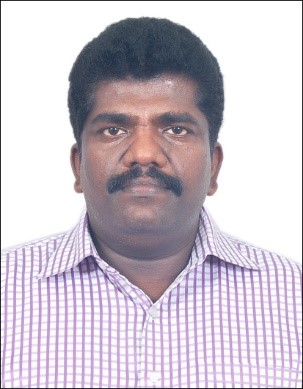
Nishanth Nalan
Senior Director/Practice Head – Life Sciences,
ACL Digital
Nishanth Nalan is the Senior Director/Practice Head (Life Sciences) at ACL Digital where he oversees the strategic direction of tech-led CRO Services/Solutions managing both functional and business responsibilities to drive building capability centers, innovation and business growth. He is currently the President of the Indian Association for Statistics in Clinical Trials (IASCT). With 20+ years of experience in the Life Sciences and CRO industry, Nishanth brings expertise across business, technology, clinical research and organizational leadership. He has built CRO organizations and led large-scale clinical accounts spanning CDM, Biostatistics, Statistical Programming, Medical Writing and technology-enabled CRO solutions. He is passionate about leveraging innovation and technology to deliver high impact solutions that contribute to better patient outcomes. He is also committed to empowering teams to achieve excellence and fostering knowledge sharing between industry and academia.
PS Jagannatha
PS Jagannatha is currently Part-time Statistics Consultant, in Eurofins-Optimed Clinical Research.He holds a Master's degree in Statistics from Bangalore University, India. He has 30+ years of experience as a Statistician with Technical Knowledge. Prior to joining Eurofins, he was with Glaxo Smithkline Pharmaceuticals Ltd for the period of 17 years. He was with the National Tuberculosis Institute, Min. of H&FW, Government of India for a period of 18yrs before Joining GSK. He has co-authored several publications in the reputed journal during his career, was involved in conducting biostatistics workshops for industry colleagues and students and presented at various professional conferences. He is a founder member of IASCT and has been actively involved with all IASCT activities for over 15 years. He started off as the event committee chair for 2 years and for 10 years has held the position of Treasurer. He is passionate about IASCT and likes to interact with colleagues across the Industry.ConSPIC means to me: Invigorating, both intellectually and emotionally and it provides a wealth of practical strategies/methods. A good platform to meet Industry friends and upcoming young statisticians and Programmers
Every clinical programming team is being asked the same question right now: What does AI actually mean for this work? Most answers fall into one of two extremes: AI as a replacement for the programmer, or AI as a tool with no place near submission-grade work. Neither survives contact with a real ADaM dataset.
This workshop demonstrates a third perspective through live examples. It shows how a large language model working alone can generate code that appears correct yet misses critical nuances that experienced programmers routinely catch.
Attendees will watch the same ADaM derivations and TFL outputs built twice: first using AI alone, and then using AI guided by a human-authored framework of standards, conventions, and review principles. The contrast highlights how human expertise transforms AI from an automation tool into a productivity amplifier.
Rather than promoting or dismissing AI, this workshop provides a practical and balanced demonstration of Human-in-the-Control Programming, showing how experienced professionals can leverage AI while maintaining quality, regulatory compliance, and scientific rigor.
Participants leave with a repeatable framework they can apply immediately on their own studies and projects.
- How AI-generated code succeeds and where it commonly fails
- Why human judgment remains essential in clinical programming
- How to build effective AI scaffolds and programming conventions
- Techniques for reviewing AI-generated ADaM derivations and TFL outputs
- How to implement Human-in-the-Control programming workflows
- Practical approaches for responsibly integrating AI into clinical development

Avinash Bandi
Senior Advisor – Strategic Capabilities & Innovation
Eli Lilly & Company
Avinash is a Mechanical Engineer by training with nearly two decades of experience in clinical statistical programming. His expertise spans ADaM, SDTM, and TFL development, with a strong foundation in SAS and advanced proficiency in R.
His current focus lies at the intersection of clinical programming, statistical workflows, and Artificial Intelligence. He is passionate about understanding how AI can enhance productivity while ensuring human expertise, judgment, and critical thinking remain central to regulatory-grade clinical development.
Through this session, Avinash will demonstrate practical examples of Human-in-the-Control programming and provide attendees with actionable strategies for safely and effectively incorporating AI into their day-to-day programming activities.
